medRxiv
  • Home
  • About
  • Submit
  • ALERTS / RSS
Advanced Search

Metallo-β-lactamase mediated rapid increase in carbapenem resistance of Pseudomonas aeruginosa

Hasnain Anjum, Shomaia Yasmin Mitu, Md. Shamsul Arefin, Meftahul Jannat Mitu, Md. Sabir Hossain, Salequl Islam, M.A. Karim Rumi, View ORCID ProfileM. Hasibur Rahman
doi: https://doi.org/10.1101/2024.03.21.24304089
Hasnain Anjum
1Department of Microbiology, Jahangirnagar University, Savar, Dhaka-1342, Bangladesh
  • Find this author on Google Scholar
  • Find this author on PubMed
  • Search for this author on this site
  • For correspondence: anjumabir27{at}gmail.com
Shomaia Yasmin Mitu
2Department of Microbiology, Jahangirnagar University, Savar, Dhaka-1342, Bangladesh
  • Find this author on Google Scholar
  • Find this author on PubMed
  • Search for this author on this site
  • For correspondence: shomaiamitu{at}gmail.com
Md. Shamsul Arefin
3Department of Microbiology, Jahangirnagar University, Savar, Dhaka-1342, Bangladesh
  • Find this author on Google Scholar
  • Find this author on PubMed
  • Search for this author on this site
  • For correspondence: arefin1120{at}gmail.com
Meftahul Jannat Mitu
4Department of Microbiology, Jahangirnagar University, Savar, Dhaka-1342, Bangladesh
  • Find this author on Google Scholar
  • Find this author on PubMed
  • Search for this author on this site
  • For correspondence: mitumeftahul1{at}gmail.com
Md. Sabir Hossain
5Department of Biochemistry and Molecular Biology, Jahangirnagar University, Savar, Dhaka-1342, Bangladesh
  • Find this author on Google Scholar
  • Find this author on PubMed
  • Search for this author on this site
  • For correspondence: sabirhossain{at}juniv.edu
Salequl Islam
6Department of Microbiology, Jahangirnagar University, Savar, Dhaka-1342, Bangladesh
  • Find this author on Google Scholar
  • Find this author on PubMed
  • Search for this author on this site
  • For correspondence: salequl{at}juniv.edu
M.A. Karim Rumi
7Department of Pathology and Laboratory Medicine, University of Kansas Medical Center, Kansas City, KS 66160, USA
  • Find this author on Google Scholar
  • Find this author on PubMed
  • Search for this author on this site
  • For correspondence: mrumi{at}kumc.edu
M. Hasibur Rahman
8Department of Microbiology, Jahangirnagar University, Savar, Dhaka-1342, Bangladesh
  • Find this author on Google Scholar
  • Find this author on PubMed
  • Search for this author on this site
  • ORCID record for M. Hasibur Rahman
  • For correspondence: hasiburku{at}juniv.edu
  • Abstract
  • Full Text
  • Info/History
  • Metrics
  • Data/Code
  • Preview PDF
Loading

Abstract

Antibiotic-resistant Pseudomonas aeruginosa is a common nosocomial pathogen all over the world. We detected the presence of P. aeruginosa in 22% (53 out of 238) of the test samples collected from patients with infections including secondary wound infections, abscesses and urinary tract infections admitted to two academic hospitals in Bangladesh. Resistance to carbapenems (imipenem, and meropenem) was present among 30% (16 out of 53) of these clinical P. aeruginosa isolates, which is more than 2-fold higher compared to that of previous studies. Such a rapid increase in carbapenem resistance was mediated by metallo-β-lactamase (MBL). Expression of MBL was detected in 90% (14 out of 16) of these resistant isolates. Molecular analyses revealed that the carbapenem-resistant isolates carried at least one of the MBL variants, either bla-VIM or bla-NDM-1. All the bla-NDM-1 positives carried a 0.5 MDa plasmid. ERIC-PCR revealed the highly heterogeneous nature of the P. aeruginosa isolates indicating multiple sources of infection within the hospital. However, the majority of XDR isolates belonged to a single cluster of drug-resistant bacterial infections. These findings indicate that Metallo-β-lactamase (MBL) mediated resistance to carbapenem in P. aeruginosa poses a serious threat to the spread of infections among hospitalized patients.

1. Introduction

Pseudomonas aeruginosa (P. aeruginosa) is one of the most common pathogens associated with nosocomial infections (1). This Gram-negative bacterium is a member of the infamous ESKAPE group of bacteria, known for their rapidly increasing antibiotic resistance in healthcare facilities (2, 3). The global priority list of emerging antibiotic-resistant bacteria recognizes P. aeruginosa as a critical pathogen that requires an in-depth study(4). It is commonly associated with wound infections, urinary tract infections (UTIs) (particularly catheter-associated UTIs), ventilator-associated respiratory tract infections (RTI), and cystic fibrosis (1, 5).

The carbapenem group of antibiotics (imipenem, meropenem, ertrapenem, and doripenem) is clinically effective against P. aeruginosa (5, 6). However, a steep rise in carbapenem resistance has been reported over the last few years (7). Susceptibility to carbapenems is dependent on their entry to bacteria through the outer membrane porin protein OprD (8). Thus, a reduced expression of OprD can lead to carbapenem resistance in P. aeruginosa (8). Other mechanisms of carbapenem resistance include decreased permeability of outer membrane porins, increased production of molecular efflux pumps, acquisition of chromosomal cephalosporinases, and expression of broad-spectrum beta-lactamases, especially carbapenemases like metallo-β-lactamases (MBLs)(9). Acquisition of MBLs through horizontal gene transfer has been increasingly identified in Gram-negative isolates from hospitalized patients(10). These enzymes can hydrolyze most of the β-lactams and are not repressed by serine β-lactamase repressors like tazobactam and clavulanates (11). As MBLs depend on bivalent zinc ions for the hydrolysis of β-lactam antibiotics, they are inactivated by metal chelators like EDTA(12).

The origins of MBLs remain unclear; it is most likely transferred from environmental bacteria like Enterobacteriaceae (13). The genes encoding MBLs are mainly spread through mobile genetic elements like integrons residing on plasmids or bacterial genomic DNA (13, 14). The majority of the MBLs belong to subclass B1 (15, 16) and the 3 most common MBLs, namely IMP (imipenemase), VIM (Verona integron-encoded metallo-β-lactamase), and NDM(New Delhi metallo-β-lactamase) are well-known for their epidemiological and clinical importance (12, 13, 17). The bla-VIM was first detected in P. aeruginosa in European countries during the late 1990s, and more than 20 different VIM allotypes have been identified worldwide (13, 18). However, bla-NDM-1, which was detected in K. pneumoniae in 2008, has been widely disseminated among Enterobacteriaceae in India (14). A significant increase in the prevalence of these MBLs has been seen throughout the world, including the United Kingdom and Southeast-Asian countries like India, Pakistan, and Bangladesh (14, 19, 20).

In this study, we investigated the presence of drug-resistant P. aeruginosa infection among hospitalized patients in Dhaka, Bangladesh. We observed that resistance to carbapenems has doubled in the past decade (6). Such a rapid increase in carbapenem resistance was mediated by metallo-β-lactamase (MBL). We detected the expression of MBL-variants in carbapenem resistant P. aeruginosa isolates and determined the heterogenic nature of the clinical isolates.

2. Materials and Methods

2.1 Isolation and Characterization of clinical isolates

Clinical samples were collected from patients admitted to two academic hospitals, Enam Medical College Hospital (EMCH) and Gonoshasthaya Samaj Vittik Medical College Hospital (GMCH) located at Savar, Bangladesh. The presence of P. aeruginosa was studied in 238 samples consisting of 115 midstream urine, 69 pus, 21 secondary wound infection swab, 12 urinary catheter swab, 10 burn wounds, 9 blood, and 2 tracheal aspirate specimens. Pseudomonas Cetrimide Agar (Scharlab S. L., Spain) was used to determine the colony morphology, fluorescence, and pigment production, followed by conventional biochemical tests according to Bargey’s Manual of Systemic Bacteriology for presumptive identification of P. aeruginosa as described previously (41, 42). Selected isolates were stored in glycerol broth at −80 °C.

2.2 Molecular Identification

Molecular identification was carried out by sequencing 16S rDNA of fourteen representative isolates. DNA templates prepared from the selected isolates were subjected to polymerase chain reaction (PCR) (43). The PCR products were purified using Promega Wizard SV Gel and PCR Clean-up System, USA and sequenced. The identity of the isolates was confirmed by BLAST analysis.

2.3. Screening of Carbapenem Resistance

To determine the susceptibility of clinical P. aeruginosa isolates to carbapenem antibiotics, Kirby Bauer disc diffusion test was used (44), followed by determination of MIC against Imipenem (IMP 10 µg) and Meropenem (MPM 10 µg). Antibiotic discs were obtained from Oxoid, UK. P. aeruginosa PAO1 was used as control. Results were interpreted according to CLSI standards and guidelines [24]. MDR nature of isolates was observed against nine additional antibiotics of six different groups (data not included in this study) and interpreted accordingly (45, 46).

2.4. Phenotypic Detection of MBL Production

To detect the production of MBL, imipenem-resistant isolates were subjected to IMP-EDTA double disc synergistic test. The pure cultures of selected isolates were plated on Mueller-Hinton agar (Oxoid, UK) to prepare bacterial lawn. Two imipenem (IMP 10 µg) disks were placed on prepared lawn by at least 20 mm distance. One of the disks was impregnated with 0.5M EDTA to achieve 750 µg/disk concentrations, which can act on MBL by removing zinc ions from the active site of the enzyme, effectively nullifying its activity. The plates were incubated overnight at 37 °C, and zone diameters for both IMP and IMP-EDTA disks were measured. Isolates exhibiting ≥17 mm inhibition zones with IMP-EDTA disc were considered MBL-positive, while isolates with ≤14 mm inhibition zones were considered MBL-negative (47).

2.5. PCR Detection of MBL

The presence of genes encoding four different variants of MBLs bla-NDM-1, bla-SPM, bla-IMP, and bla-VIM were investigated in all isolates exhibiting phenotypic resistance against imipenem. PCR reagents were obtained from Promega, USA and the primers were designed according to previous publications (24, 48). The primer as well as annealing temperatures are listed in Table 1. For each PCR reaction, 2 µl of prepared bacterial DNA was added to 16 µl of prepared PCR-ready mix containing (1X PCR buffer, 2.5mM MgCl2, 0.25 mM dNTP, 1IU of Taq DNA polymerase, 10 pmol of each primer), and deionized water was added to obtain a final volume of 25 µl. The PCR reactions were carried out as indicated in Table 3. The PCR products were visualized using a UV transilluminator after electrophoresis in 1% agarose gel.

View this table:
  • View inline
  • View popup
  • Download powerpoint
Table 1. List of PCR primers used in this study.

2.6. ERIC-PCR for Species Diversity Analysis

To observe the diversity among the P. aeruginosa isolates, ERIC-PCR (Enterobacterial Repetitive Intergenic Consensus-Polymerase Chain Reaction) was performed using the primer sequence mentioned elsewhere (49). PCR products were separated on 2% agarose gel and visualized under a UV transilluminator. The cluster analysis was conducted by using DendroUPGMA (21, 50).

2.7. Plasmid Extraction

Plasmids from carbapenem-resistant P. aeruginosa isolates were extracted according to the modified hot alkaline lysis method by Kado and Liu (51). Extracted plasmids were electrophoresed in 0.7% agarose gel with ethidium bromide (0.5 mg/mL) and visualized under a UV transilluminator. Reference strains of E. coli K-12 V517 and PDK9 were used as control strains for the extraction method and plasmid size marker (52, 53).

2.8. Statistical Analysis

A validated questionnaire was used for data collection. Collected data were verified and analyzed by using IBM SPSS Statistics Data Editor (Version 21) and STATA 15.

3. Results

3.1. Isolation and identification of P. aeruginosa

A total of 238 clinical samples were collected from the patients admitted into two academic hospitals in Savar City, at the outskirts of Dhaka, the capital of Bangladesh. Most of clinical samples were collected from patients with UTI, followed by secondary wound infections and abscesses (Table 1). The samples were tested for the presence of P. aeruginosa and 53 (∼22%) showed growth on selective cetrimide agar, which were further characterized through standard biochemical tests. Identification of the clinical isolates was confirmed by PCR-based 16SrDNA sequence analyses, which showed a 95 to 99% identity to P. aeruginosa sequence (e-value ≤0). We detected that wound infections were more frequently positive for P. aeruginosa compared to other infections.

3.2. Carbapenem resistance in clinical P. aeruginosa isolates

All 53 isolates of P. aeruginosa were tested for susceptibility to carbapenem (imipenem and meropenem) using a disk-diffusion method followed by minimum inhibitory concentration (MIC) assays. Out of 53 isolates, 16 (30%) were resistant to both imipenem and meropenem. However, the antibiotic tolerance levels varied widely in the MIC assay. While 50% (8/16) of carbapenem-resistant isolates showed a moderate resistance (8 µg/ml), the other 50% isolates had a much higher resistance level (≥16 to 128 µg/ml). Among the 16 carbapenem-resistant P. aeruginosa isolates, 6 were from GMCH (38%), while the rest 10 (62%) were from the EMCH (Table 1). Antibiogram profile identified 12 isolates as multidrug resistant (MDR), and another 2 isolates as extensively drug resistant (XDR). Moreover, uniform resistance against third generation cephalosporins like ceftriaxone and cefotaxime and significantly lower susceptibility to important antibiotics like azithromycin and tetracycline was observed, which is alarmingly higher than previous regional reports.

3.3. Detection of MBL in P. aeruginosa isolates

All of the 16 imipenem-resistant P. aeruginosa isolates were subjected to enzymatic activity and PCR based genotypic detection of MBL variants. Of the 16 isolates, 14 (∼88%) were positive for MBL activity in an imipenem-EDTA double-disk synergistic test. PCR-based detection of the MBL variants, bla-VIM, bla-NDM1, bla-IMP, and bla-SPM, showed that 10 out of the 16 (∼63%)resistant isolates carried at least one. While bla-VIM was detected in 7 out of 16 isolates (44%), bla-NDM-1 was detected in 3 isolates (19.75%) (Figure 1). We did not detect any of MBL variants, bla-VIM, bla-NDM1, bla- IMP, and bla-SPM in other 6 isolates. Moreover, none of the isolates were multiple MBL genes carrier (Table 3).

Figure 1.
  • Download figure
  • Open in new tab
Figure 1. PCR based detection of MBL variants.

MBL gene sequences were PCR amplified using the variant-specific primers (Table 3). PCR products were electrophoresed through 1% agaroge gels, stained with ethidium bromide, and visualized with UV light. The 100 bp DNA ladder indicates the size of PCR products. Lane 2, 7, 12 and 16 represent variant-specific positive controls, and lane 3, 8, 13 and 17 represent negative controls. No isolates were positive in bla-IMP and bla-SPM specific PCR.

View this table:
  • View inline
  • View popup
  • Download powerpoint
Table 2. Collection of samples and culture results.
View this table:
  • View inline
  • View popup
  • Download powerpoint
Table 3. Antibiotic susceptibility and resistance determinants in Imipenem-resistant clinical P. aeruginosa.

3.4. Detection of plasmids in MBL positive isolates

Plasmid extraction and gel electrophoresis detected the presence of plasmids in 7 out of the 16 (43%) MBL-positive isolates. Among 7 bla-VIM positive isolates, 4 carried a plasmid of 1.2 MDa, while the other 3 isolates did not carry any plamid. In constrast all 3 of the bla-NDM1 positive P. aeruginosa isolates carried a plasmid of 0.5 MDa (Table 3).

3.5. ERIC-PCR and cluster analysis

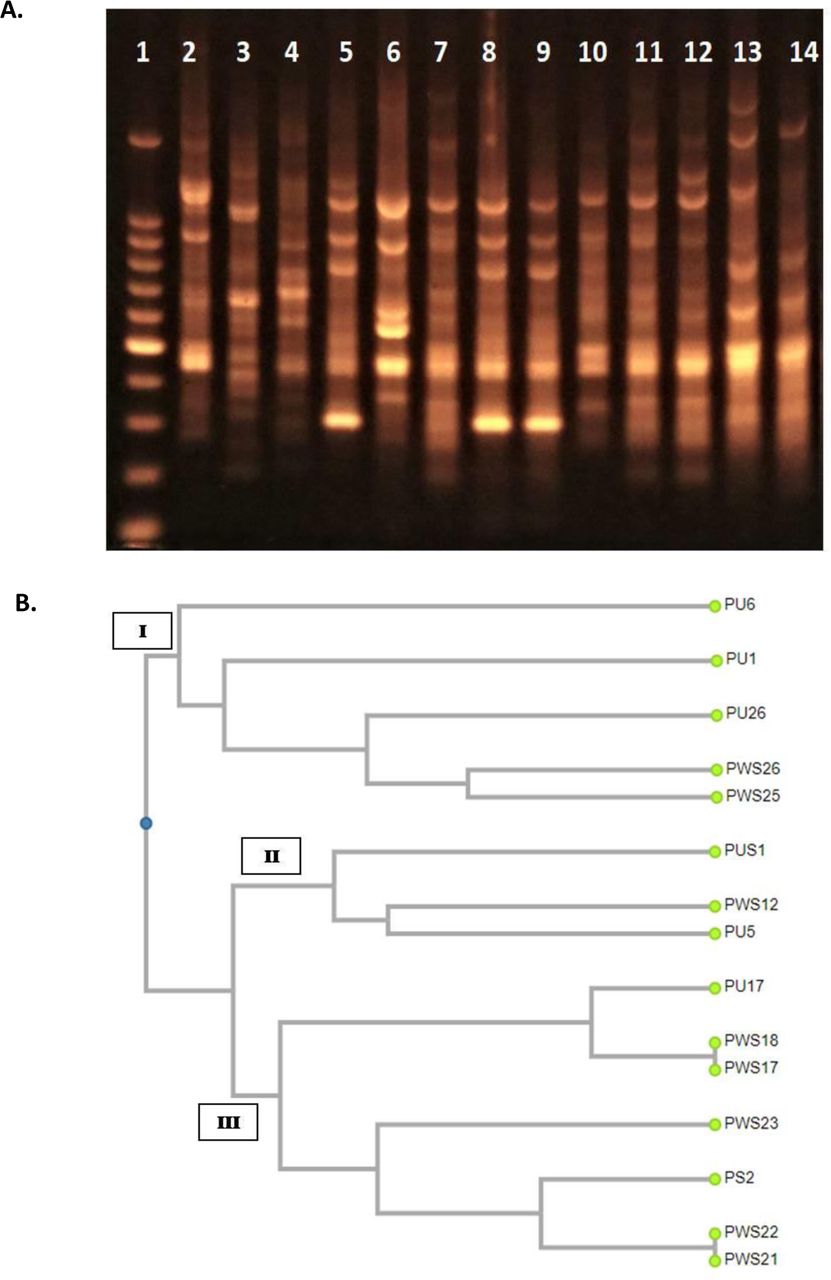
Enterobacterial Repetitive Intergenic Consensus-Polymerase Chain Reaction (ERIC-PCR) was performed to determine the possible epidemiological relationships among the clinical P. aeruginosa isolates (21).Our results revealed distinct patterns of DNA, indicating species diversity among carbapenem-resistant P. aeruginosa isolates. Highly heterogeneous results indicated that the isolates did not share significant genetic relatedness. Phylogenetic cluster analysis based on unweighted pair group method with arithmetic mean (UPGMA) exhibited the presence of three distinct clusters I-III (Figure 2). The majority of the XDR isolates belonged to cluster III, while cluster I and II were composed of MDR isolates.

Figure 2.
  • Download figure
  • Open in new tab
Figure 2. UPGMA cluster analysis of ERIC-PCR results.

A). ERIC-PCR products were electrophoresed on 1% agarose gel, stained with ethidium bromide, and visualized on UV light. Lane 1 represent 100 bp DNA ladder; Lane 8 and 9 represent isolates PWS18 and PWS17 respectively showing identical amplification pattern. Similarly, Lane 10 and 11 represent isolates PWS22 and PWS21 respectively showing identical amplification. Rest of the lanes represent unique PCR amplification profiles. B). Dendrogram based on UPGMA cluster analysis of ERIC-PCR results; the names of the analyzed strains are mentioned with their phylogenetic groups denominated as Cluster I, II and III.

4. Discussion

Rapid development of antibiotic-resistance in Gram-negative bacteria including P. aeruginosa has become a major public health concern all over the world (2, 3). There is an alarming increase in MDR, XDR, and PDR isolates of P. aeruginosa (22, 23). In this study, we also observed frequent occurances of MDR among the P. aeruginosa isolates in Bangladesh. Remarkably, one in every three isolates was resistant to carbapenems. While the interquartile range (IQR) of imipenem resistance found in a systematic review covering studies during 2004 to 2018 was 13.5%, we detected a huge increase to 30%(6).

Our results indicate that the rapid increase in imipenem resistance among P. aeruginosa clinical isolates in Bangladesh is mediated by MBLs. About 88% of the resistant isolates were positive for MBL production. The MBL-positive isolates also showed an elevated level of MIC values of imipenem and meropenem. Resistance to carbapenems is often associated with the acquisition and expression of the MBLs, which includes bla-IMP, bla-VIM, bla-GIM, bla-SPM, bla-NDM and bla-SIM genes (24). In this study 71% of the carbapenem-resistant isolates were found to carry variants of MBL genes. While the majority (7/16; 44%) of the isolates carried bla-VIM, only 19% (3/16) carried bla-NDM-1. The current investigation shows a much higher prevalence of MBL genes among P. aeruginosa isolates compared to similar studies conducted in India (12%), Pakistan (18%), China (55%), Iran (40%), and Nigeria (17%)(25–28). Moreover, it needs to be noted that we investigated the presence of only four variants (bla-IMP, bla-VIM, bla-SPM, and bla-NDM-1). Therefore, we cannot exclude the presence of other MBL variants in remaining 29% of the isolates.

In this study, bla-VIM variant was found to be the most prevalent among the MBL genes tested (7/16, 44%). Dissemination of novel variants of bla-VIM is commonly mediated by class I integrons like In58 and In59 gene cassettes (29, 30). Plasmids carrying class I integrons possess strong dissemination potential (31, 32). However, several of the bla-VIM carrier isolates (3/7, 42%) in our study did not carry any plasmid, implying that these isolates may have integrons in their chromosomal DNA.

In this study, the presence of bla-NDM-1 was detected among 3 of 16 carbapenem-resistant isolates. Classically bla-NDM-1 encoding gene is also plasmid-borne, which has been found to be disseminated through the members of the Enterobacteriaceae and Pseudomonaceae family (32, 33). Transmission of bla-NDM-1 has been also reported in Acinetobacter baumanii by transposon Tn125 (34, 35). It has been shown that bla-NDM-1 gene can be carried on plasmids of diverse sizes with incompatibility types that allow interspecies, intergenus, and interfamily transfer (36). In this study, we observed the presence of a 0.5 MDa plasmid in P. aeruginosa isolates that carried the bla-NDM-1 gene. Remarkably, all bla-NDM-1 carriers were isolated from UTI and catheter-associated infections.

We employed ERIC-PCR for molecular typing of genetic relatedness among the P. aeruginosa isolates. ERIC-PCR revealed that the carbapenem-resistant P. aeruginosa isolates were distributed in three distinct clusters, with the majority belonging to cluster III. Overall analyses of our ERIC-PCR data indicated a heterogeneous nature of P. aeruginosa isolates and possible independent sources of dissemination. Several previous studies also reported similar heterogenous nature of P. aeruginosa isolates (26, 37). However, the XDR isolates found in this study were all grouped in cluster III in ERIC-PCR analyses.

Our test samples were collected from two academic hospitals. Interestingly, both carbapenem resistance and the presence of MBL pattern was different between the two hospitals. Although 35% (6/17) of the P. aeruginosa from GMCH were carbapenem resistant, 2 were phenotypically MBL negative and none were positive for the presence of MBL variants tested. In contrast, 28% (10/36) of the P. aeruginosa from EMCH were carbapenem resistant, but all the isolates carried MBL genes. Compared to GMCH, EMCH is a larger, tertiary care hospital that admits more patients for a longer period, which might establish a favorable niche for dissemination of MBL genes among nosocomial agents like P. aeruginosa. Previous studies also suggested that larger number of patients may harbor frequent source of drug resistant bacterial infections and prolonged hospitalization may increase the risk of acquisition of drug resistance elements through horizontal gene transfer (38, 39). A recent study in Bangladesh also demonstrated that hospital environment is a major reservoir for carbapenem-resistant P. aeruginosa with MBL carriage (40).

Indiscriminate use of therapeutically important antibiotics is presumed to be the major cause of antibiotic resistance and the transmission of such resistant pathogens is more likely among hospitalized patients, especially those who need prolonged stay. Horizontal transfer of antibiotic resistance determinants further complicates the control strategies. Our results suggest that rapid screening by molecular techniques like ERIC-PCR may help track multidrug-resistant P. aeruginosa outbreaks in hospitals and develop point-of-care surveillance.

5. Conclusions

The emerging threat of ever-increasing antibiotic resistance among P. aeruginosa of clinical origin is a major concern for the treatment of nosocomial infections caused by the pathogen. The magnitude of multidrug resistance and the presence of MBL variants in clinical settings reported in this study require immediate attention to improve infection control and prevention programs. This study also suspects the hospital environment to facilitate the horizontal transfer of resistance elements like MBL genes. Implementation of antibiotic stewardship policy alongside proper infection control now has become a public health emergency to combat the emerging threat of superbugs in healthcare settings of developing countries like Bangladesh.

6. Ethics statement

This study was approved by the Ethics and Research Review Committee of the Jahangirnagar University Faculty of Biological Sciences [Ref No: BBEC, JU/M 2020 (1)4]. Written informed consent was obtained from patients for sample collection, and their personal identities along with other information were anonymized.

Author Contributions

All authors made a significant contribution to the work reported. M.H.R. conceptualized and supervised the study. H.A., S.Y.M., M.S.A, and M.J.M. collected the clinical samples and conducted laboratory experiments. H.A. and S.Y.M. also analyzed the data and prepared the manuscript. M.S.H. and S.I. made significant contributions to the study design and M.A.K.R. edited the manuscript. The authors agree and approve the content of the final version of the manuscript.

Funding

M. H.R. received funding support from the Grants for Advanced Research in Education (GARE), the Ministry of Education, Bangladesh (Award ID: bs-37.20.0000.004.033.020.2016.673).

Data Availability

All data produced in the present study are available upon reasonable request to the authors

Conflicts of Interest

The authors declare that they have no conflict of interest.

Acknowledgments

The authors would like to thank the laboratory personnel of Enam Medical College Hospital and Gonoshasthaya Medical College Hospital, Dhaka, Bangladesh, for their support in the collection of the clinical samples.

References

  1. 1.↵
    Kollef MH, Shorr A, Tabak YP, Gupta V, Liu LZ, Johannes RS. Epidemiology and outcomes of health-care-associated pneumonia: results from a large US database of culture-positive pneumonia. Chest. 2005;128(6):3854–62. doi: 10.1378/chest.128.6.3854. PubMed PMID: 16354854.
    OpenUrlCrossRefPubMedWeb of Science
  2. 2.↵
    Boucher HW, Talbot GH, Bradley JS, Edwards JE, Gilbert D, Rice LB, et al. Bad bugs, no drugs: no ESKAPE! An update from the Infectious Diseases Society of America. Clin Infect Dis. 2009;48(1):1–12. doi: 10.1086/595011. PubMed PMID: 19035777.
    OpenUrlCrossRefPubMedWeb of Science
  3. 3.↵
    Rice LB. Progress and challenges in implementing the research on ESKAPE pathogens. Infect Control Hosp Epidemiol. 2010;31 Suppl 1:S7–10. doi: 10.1086/655995. PubMed PMID: 20929376.
    OpenUrlCrossRefPubMed
  4. 4.↵
    Mancuso G, Midiri A, Gerace E, Biondo C. Bacterial Antibiotic Resistance: The Most Critical Pathogens. Pathogens. 2021;10(10). Epub 20211012. doi: 10.3390/pathogens10101310. PubMed PMID: 34684258; PubMed Central PMCID: PMC8541462.
    OpenUrlCrossRefPubMed
  5. 5.↵
    Mittal R, Aggarwal S, Sharma S, Chhibber S, Harjai K. Urinary tract infections caused by Pseudomonas aeruginosa: a minireview. J Infect Public Health. 2009;2(3):101–11. Epub 20090919. doi: 10.1016/j.jiph.2009.08.003. PubMed PMID: 20701869.
    OpenUrlCrossRefPubMed
  6. 6.↵
    Ahmed I, Rabbi MB, Sultana S. Antibiotic resistance in Bangladesh: A systematic review. Int J Infect Dis. 2019;80:54–61. Epub 20190110. doi: 10.1016/j.ijid.2018.12.017. PubMed PMID: 30634043.
    OpenUrlCrossRefPubMed
  7. 7.↵
    Lodise TP, Bassetti M, Ferrer R, Naas T, Niki Y, Paterson DL, et al. All-cause mortality rates in adults with carbapenem-resistant Gram-negative bacterial infections: a comprehensive review of pathogen-focused, prospective, randomized, interventional clinical studies. Expert Rev Anti Infect Ther. 2022;20(5):707–19. Epub 20220112. doi: 10.1080/14787210.2022.2020099. PubMed PMID: 34937518.
    OpenUrlCrossRefPubMed
  8. 8.↵
    Beig M, Taheri M, Arabestani MR. Expression of MexAB-OprM efflux pump and OprD porin in carbapenemase producing Pseudomonas aeruginosa clinical isolates. Gene Reports. 2020;20:100744. doi: 10.1016/j.genrep.2020.100744.
    OpenUrlCrossRef
  9. 9.↵
    Rostami S, Farajzadeh Sheikh A, Shoja S, Farahani A, Tabatabaiefar MA, Jolodar A, et al. Investigating of four main carbapenem-resistance mechanisms in high-level carbapenem resistant Pseudomonas aeruginosa isolated from burn patients. J Chin Med Assoc. 2018;81(2):127–32. Epub 20171009. doi: 10.1016/j.jcma.2017.08.016. PubMed PMID: 29033110.
    OpenUrlCrossRefPubMed
  10. 10.↵
    Deshmukh DG, Damle AS, Bajaj JK, Bhakre JB, Patwardhan NS. Metallo-β-lactamase-producing clinical isolates from patients of a tertiary care hospital. J Lab Physicians. 2011;3(2):93–7. doi: 10.4103/0974-2727.86841. PubMed PMID: 22219562; PubMed Central PMCID: PMC3249725.
    OpenUrlCrossRefPubMed
  11. 11.↵
    Emeraud C, Escaut L, Boucly A, Fortineau N, Bonnin RA, Naas T, et al. Aztreonam plus Clavulanate, Tazobactam, or Avibactam for Treatment of Infections Caused by Metallo-β-Lactamase-Producing Gram-Negative Bacteria. Antimicrob Agents Chemother. 2019;63(5). Epub 20190425. doi: 10.1128/aac.00010-19. PubMed PMID: 30858212; PubMed Central PMCID: PMC6496057.
    OpenUrlAbstract/FREE Full Text
  12. 12.↵
    Walsh TR, Toleman MA, Poirel L, Nordmann P. Metallo-beta-lactamases: the quiet before the storm? Clin Microbiol Rev. 2005;18(2):306–25. doi: 10.1128/cmr.18.2.306-325.2005. PubMed PMID: 15831827; PubMed Central PMCID: PMC1082798.
    OpenUrlAbstract/FREE Full Text
  13. 13.↵
    Cornaglia G, Giamarellou H, Rossolini GM. Metallo-β-lactamases: a last frontier for β-lactams? Lancet Infect Dis. 2011;11(5):381–93. doi: 10.1016/s1473-3099(11)70056-1. PubMed PMID: 21530894.
    OpenUrlCrossRefPubMedWeb of Science
  14. 14.↵
    Kumarasamy KK, Toleman MA, Walsh TR, Bagaria J, Butt F, Balakrishnan R, et al. Emergence of a new antibiotic resistance mechanism in India, Pakistan, and the UK: a molecular, biological, and epidemiological study. Lancet Infect Dis. 2010;10(9):597–602. Epub 20100810. doi: 10.1016/s1473-3099(10)70143-2. PubMed PMID: 20705517; PubMed Central PMCID: PMC2933358.
    OpenUrlCrossRefPubMedWeb of Science
  15. 15.↵
    Bush K. The ABCD’s of β-lactamase nomenclature. J Infect Chemother. 2013;19(4):549–59. Epub 20130705. doi: 10.1007/s10156-013-0640-7. PubMed PMID: 23828655.
    OpenUrlCrossRefPubMed
  16. 16.↵
    Mojica MF, Bonomo RA, Fast W. B1-Metallo-β-Lactamases: Where Do We Stand? Curr Drug Targets. 2016;17(9):1029–50. doi: 10.2174/1389450116666151001105622. PubMed PMID: 26424398; PubMed Central PMCID: PMC4814356.
    OpenUrlCrossRefPubMed
  17. 17.↵
    Queenan AM, Bush K. Carbapenemases: the versatile beta-lactamases. Clin Microbiol Rev. 2007;20(3):440–58, table of contents. doi: 10.1128/cmr.00001-07. PubMed PMID: 17630334; PubMed Central PMCID: PMC1932750.
    OpenUrlAbstract/FREE Full Text
  18. 18.↵
    Lauretti L, Riccio ML, Mazzariol A, Cornaglia G, Amicosante G, Fontana R, et al. Cloning and characterization of blaVIM, a new integron-borne metallo-beta-lactamase gene from a Pseudomonas aeruginosa clinical isolate. Antimicrob Agents Chemother. 1999;43(7):1584–90. doi: 10.1128/aac.43.7.1584. PubMed PMID: 10390207; PubMed Central PMCID: PMC89328.
    OpenUrlAbstract/FREE Full Text
  19. 19.↵
    Khan AU, Maryam L, Zarrilli R. Structure, Genetics and Worldwide Spread of New Delhi Metallo-β-lactamase (NDM): a threat to public health. BMC Microbiol. 2017;17(1):101. Epub 20170427. doi: 10.1186/s12866-017-1012-8. PubMed PMID: 28449650; PubMed Central PMCID: PMC5408368.
    OpenUrlCrossRefPubMed
  20. 20.↵
    Urmi UL, Nahar S, Rana M, Sultana F, Jahan N, Hossain B, et al. Genotypic to Phenotypic Resistance Discrepancies Identified Involving β-Lactamase Genes, blaKPC, blaIMP, blaNDM-1, and blaVIM in Uropathogenic Klebsiella pneumoniae. Infect Drug Resist. 2020;13:2863-75. Epub 20200818. doi: 10.2147/idr.S262493. PubMed PMID: 32903880; PubMed Central PMCID: PMC7445497.
    OpenUrlCrossRefPubMed
  21. 21.↵
    Ranjbar R, Tabatabaee A, Behzadi P, Kheiri R. Enterobacterial Repetitive Intergenic Consensus Polymerase Chain Reaction (ERIC-PCR) Genotyping of Escherichia coli Strains Isolated from Different Animal Stool Specimens. Iran J Pathol. 2017;12(1):25–34. Epub 20161229. PubMed PMID: 29760750; PubMed Central PMCID: PMC5938721.
    OpenUrlPubMed
  22. 22.↵
    Micek ST, Wunderink RG, Kollef MH, Chen C, Rello J, Chastre J, et al. An international multicenter retrospective study of Pseudomonas aeruginosa nosocomial pneumonia: impact of multidrug resistance. Crit Care. 2015;19(1):219. Epub 20150506. doi: 10.1186/s13054-015-0926-5. PubMed PMID: 25944081; PubMed Central PMCID: PMC4446947.
    OpenUrlCrossRefPubMed
  23. 23.↵
    Palavutitotai N, Jitmuang A, Tongsai S, Kiratisin P, Angkasekwinai N. Epidemiology and risk factors of extensively drug-resistant Pseudomonas aeruginosa infections. PLoS One. 2018;13(2):e0193431. Epub 20180222. doi: 10.1371/journal.pone.0193431. PubMed PMID: 29470531; PubMed Central PMCID: PMC5823452.
    OpenUrlCrossRefPubMed
  24. 24.↵
    Ellington MJ, Kistler J, Livermore DM, Woodford N. Multiplex PCR for rapid detection of genes encoding acquired metallo-beta-lactamases. J Antimicrob Chemother. 2007;59(2):321–2. Epub 20061221. doi: 10.1093/jac/dkl481. PubMed PMID: 17185300.
    OpenUrlCrossRefPubMedWeb of Science
  25. 25.↵
    Mohanam L, Menon T. Coexistence of metallo-beta-lactamase-encoding genes in Pseudomonas aeruginosa. Indian J Med Res. 2017;146(Supplement):S46-s52. doi: 10.4103/ijmr.IJMR_29_16. PubMed PMID: 29205195; PubMed Central PMCID: PMC5735570.
    OpenUrlCrossRefPubMed
  26. 26.↵
    Saleem S, Bokhari H. Resistance profile of genetically distinct clinical Pseudomonas aeruginosa isolates from public hospitals in central Pakistan. J Infect Public Health. 2020;13(4):598–605. Epub 20190926. doi: 10.1016/j.jiph.2019.08.019. PubMed PMID: 31564530.
    OpenUrlCrossRefPubMed
  27. 27.
    Olaniran OB, Adeleke OE, Donia A, Shahid R, Bokhari H. Incidence and Molecular Characterization of Carbapenemase Genes in Association with Multidrug-Resistant Clinical Isolates of Pseudomonas aeruginosa from Tertiary Healthcare Facilities in Southwest Nigeria. Curr Microbiol. 2021;79(1):27. Epub 20211214. doi: 10.1007/s00284-021-02706-3. PubMed PMID: 34905085.
    OpenUrlCrossRefPubMed
  28. 28.↵
    Namaei MH, Yousefi M, Askari P, Roshanravan B, Hashemi A, Rezaei Y. High prevalence of multidrug-resistant non-fermentative Gram-negative bacilli harboring bla (IMP-1) and bla (VIM-1) metallo-beta-lactamase genes in Birjand, south-east Iran. Iran J Microbiol. 2021;13(4):470–9. doi: 10.18502/ijm.v13i4.6971. PubMed PMID: 34557275; PubMed Central PMCID: PMC8421574.
    OpenUrlCrossRefPubMed
  29. 29.↵
    Botelho J, Grosso F, Quinteira S, Brilhante M, Ramos H, Peixe L. Two decades of blaVIM-2-producing Pseudomonas aeruginosa dissemination: an interplay between mobile genetic elements and successful clones. J Antimicrob Chemother. 2018;73(4):873–82. doi: 10.1093/jac/dkx517. PubMed PMID: 29373674.
    OpenUrlCrossRefPubMed
  30. 30.↵
    Siarkou VI, Vitti D, Protonotariou E, Ikonomidis A, Sofianou D. Molecular epidemiology of outbreak-related pseudomonas aeruginosa strains carrying the novel variant blaVIM-17 metallo-beta-lactamase gene. Antimicrob Agents Chemother. 2009;53(4):1325–30. Epub 20090121. doi: 10.1128/aac.01230-08. PubMed PMID: 19164147; PubMed Central PMCID: PMC2663106.
    OpenUrlAbstract/FREE Full Text
  31. 31.↵
    Lombardi G, Luzzaro F, Docquier JD, Riccio ML, Perilli M, Colì A, et al. Nosocomial infections caused by multidrug-resistant isolates of pseudomonas putida producing VIM-1 metallo-beta-lactamase. J Clin Microbiol. 2002;40(11):4051–5. doi: 10.1128/jcm.40.11.4051-4055.2002. PubMed PMID: 12409373; PubMed Central PMCID: PMC139695.
    OpenUrlAbstract/FREE Full Text
  32. 32.↵
    Poirel L, Naas T, Nicolas D, Collet L, Bellais S, Cavallo JD, et al. Characterization of VIM-2, a carbapenem-hydrolyzing metallo-beta-lactamase and its plasmid- and integron-borne gene from a Pseudomonas aeruginosa clinical isolate in France. Antimicrob Agents Chemother. 2000;44(4):891–7. doi: 10.1128/aac.44.4.891-897.2000. PubMed PMID: 10722487; PubMed Central PMCID: PMC89788.
    OpenUrlAbstract/FREE Full Text
  33. 33.↵
    Walsh TR, Weeks J, Livermore DM, Toleman MA. Dissemination of NDM-1 positive bacteria in the New Delhi environment and its implications for human health: an environmental point prevalence study. Lancet Infect Dis. 2011;11(5):355–62. Epub 20110407. doi: 10.1016/s1473-3099(11)70059-7. PubMed PMID: 21478057.
    OpenUrlCrossRefPubMedWeb of Science
  34. 34.↵
    Pfeifer Y, Wilharm G, Zander E, Wichelhaus TA, Göttig S, Hunfeld KP, et al. Molecular characterization of blaNDM-1 in an Acinetobacter baumannii strain isolated in Germany in 2007. J Antimicrob Chemother. 2011;66(9):1998–2001. Epub 20110621. doi: 10.1093/jac/dkr256. PubMed PMID: 21693460.
    OpenUrlCrossRefPubMedWeb of Science
  35. 35.↵
    Poirel L, Bonnin RA, Boulanger A, Schrenzel J, Kaase M, Nordmann P. Tn125-related acquisition of blaNDM-like genes in Acinetobacter baumannii. Antimicrob Agents Chemother. 2012;56(2):1087–9. Epub 20111205. doi: 10.1128/aac.05620-11. PubMed PMID: 22143526; PubMed Central PMCID: PMC3264265.
    OpenUrlAbstract/FREE Full Text
  36. 36.↵
    Carattoli A. Plasmids and the spread of resistance. Int J Med Microbiol. 2013;303(6-7):298–304. Epub 20130314. doi: 10.1016/j.ijmm.2013.02.001. PubMed PMID: 23499304.
    OpenUrlCrossRefPubMed
  37. 37.↵
    Hematzadeh A, Haghkhah M. Biotyping of isolates of Pseudomonas aeruginosa isolated from human infections by RAPD and ERIC-PCR. Heliyon. 2021;7(9):e07967. Epub 20210908. doi: 10.1016/j.heliyon.2021.e07967. PubMed PMID: 34604557; PubMed Central PMCID: PMC8473555.
    OpenUrlCrossRefPubMed
  38. 38.↵
    Stanton RA, Campbell D, McAllister GA, Breaker E, Adamczyk M, Daniels JB, et al. Whole-Genome Sequencing Reveals Diversity of Carbapenem-Resistant Pseudomonas aeruginosa Collected through CDC’s Emerging Infections Program, United States, 2016-2018. Antimicrob Agents Chemother. 2022;66(9):e0049622. Epub 20220906. doi: 10.1128/aac.00496-22. PubMed PMID: 36066241; PubMed Central PMCID: PMC9487505.
    OpenUrlCrossRefPubMed
  39. 39.↵
    Aslam B, Wang W, Arshad MI, Khurshid M, Muzammil S, Rasool MH, et al. Antibiotic resistance: a rundown of a global crisis. Infect Drug Resist. 2018;11:1645–58. Epub 20181010. doi: 10.2147/idr.S173867. PubMed PMID: 30349322; PubMed Central PMCID: PMC6188119.
    OpenUrlCrossRefPubMed
  40. 40.↵
    Saha K, Kabir ND, Islam MR, Amin MB, Hoque KI, Halder K, et al. Isolation and characterisation of carbapenem-resistant Pseudomonas aeruginosa from hospital environments in tertiary care hospitals in Dhaka, Bangladesh. J Glob Antimicrob Resist. 2022;30:31–7. Epub 20220418. doi: 10.1016/j.jgar.2022.04.008. PubMed PMID: 35447383.
    OpenUrlCrossRefPubMed
  41. 41.↵
    Gilardi GL. Characterization of Pseudomonas species isolated from clinical specimens. Appl Microbiol. 1971;21(3):414–9. doi: 10.1128/am.21.3.414-419.1971. PubMed PMID: 4928600; PubMed Central PMCID: PMC377195.
    OpenUrlAbstract/FREE Full Text
  42. 42.↵
    O’Hara C M. Manual and automated instrumentation for identification of Enterobacteriaceae and other aerobic gram-negative bacilli. Clin Microbiol Rev. 2005;18(1):147–62. doi: 10.1128/cmr.18.1.147-162.2005. PubMed PMID: 15653824; PubMed Central PMCID: PMC544179.
    OpenUrlAbstract/FREE Full Text
  43. 43.↵
    Weisburg WG, Barns SM, Pelletier DA, Lane DJ. 16S ribosomal DNA amplification for phylogenetic study. J Bacteriol. 1991;173(2):697–703. doi: 10.1128/jb.173.2.697-703.1991. PubMed PMID: 1987160; PubMed Central PMCID: PMC207061.
    OpenUrlAbstract/FREE Full Text
  44. 44.↵
    Bauer AW, Kirby WM, Sherris JC, Turck M. Antibiotic susceptibility testing by a standardized single disk method. Am J Clin Pathol. 1966;45(4):493–6. PubMed PMID: 5325707.
    OpenUrlCrossRefPubMed
  45. 45.↵
    Gill MM, Usman J, Kaleem F, Hassan A, Khalid A, Anjum R, et al. Frequency and antibiogram of multi-drug resistant Pseudomonas aeruginosa. J Coll Physicians Surg Pak. 2011;21(9):531–4. PubMed PMID: 21914408.
    OpenUrlPubMed
  46. 46.↵
    Magiorakos AP, Srinivasan A, Carey RB, Carmeli Y, Falagas ME, Giske CG, et al. Multidrug-resistant, extensively drug-resistant and pandrug-resistant bacteria: an international expert proposal for interim standard definitions for acquired resistance. Clin Microbiol Infect. 2012;18(3):268–81. Epub 20110727. doi: 10.1111/j.1469-0691.2011.03570.x. PubMed PMID: 21793988.
    OpenUrlCrossRefPubMed
  47. 47.↵
    Yong D, Lee K, Yum JH, Shin HB, Rossolini GM, Chong Y. Imipenem-EDTA disk method for differentiation of metallo-beta-lactamase-producing clinical isolates of Pseudomonas spp. and Acinetobacter spp. J Clin Microbiol. 2002;40(10):3798–801. doi: 10.1128/jcm.40.10.3798-3801.2002. PubMed PMID: 12354884; PubMed Central PMCID: PMC130862.
    OpenUrlAbstract/FREE Full Text
  48. 48.↵
    Rad ZR, Rad ZR, Goudarzi H, Goudarzi M, Alizade H, Hematian A, et al. Detection of New Delhi Metallo-β-lactamase-1 among Pseudomonas aeruginosa isolated from adult and Pediatric patients in Iranian hospitals. Gene Reports. 2021;23:101152. doi: 10.1016/j.genrep.2021.101152.
    OpenUrlCrossRef
  49. 49.↵
    Versalovic J, Koeuth T, Lupski JR. Distribution of repetitive DNA sequences in eubacteria and application to fingerprinting of bacterial genomes. Nucleic Acids Res. 1991;19(24):6823–31. doi: 10.1093/nar/19.24.6823. PubMed PMID: 1762913; PubMed Central PMCID: PMC329316.
    OpenUrlCrossRefPubMedWeb of Science
  50. 50.↵
    Aljindan R, Alsamman K, Elhadi N. ERIC-PCR Genotyping of Acinetobacter baumannii Isolated from Different Clinical Specimens. Saudi J Med Med Sci. 2018;6(1):13–7. Epub 20171214. doi: 10.4103/sjmms.sjmms_138_16. PubMed PMID: 30787810; PubMed Central PMCID: PMC6196677.
    OpenUrlCrossRefPubMed
  51. 51.↵
    Kado CI, Liu ST. Rapid procedure for detection and isolation of large and small plasmids. J Bacteriol. 1981;145(3):1365–73. doi: 10.1128/jb.145.3.1365-1373.1981. PubMed PMID: 7009583; PubMed Central PMCID: PMC217141.
    OpenUrlAbstract/FREE Full Text
  52. 52.↵
    Macrina FL, Kopecko DJ, Jones KR, Ayers DJ, McCowen SM. A multiple plasmid-containing Escherichia coli strain: convenient source of size reference plasmid molecules. Plasmid. 1978;1(3):417–20. doi: 10.1016/0147-619x(78)90056-2. PubMed PMID: 372973.
    OpenUrlCrossRefPubMedWeb of Science
  53. 53.↵
    Haider K, Huq MI, Talukder KA, Ahmad QS. Electropherotyping of plasmid DNA of different serotypes of Shigella flexneri isolated in Bangladesh. Epidemiol Infect. 1989;102(3):421–8. doi: 10.1017/s0950268800030132. PubMed PMID: 2661251; PubMed Central PMCID: PMC2249461.
    OpenUrlCrossRefPubMed
Back to top
PreviousNext
Posted March 28, 2024.
Download PDF
Data/Code
Email

Thank you for your interest in spreading the word about medRxiv.

NOTE: Your email address is requested solely to identify you as the sender of this article.

Enter multiple addresses on separate lines or separate them with commas.
Metallo-β-lactamase mediated rapid increase in carbapenem resistance of Pseudomonas aeruginosa
(Your Name) has forwarded a page to you from medRxiv
(Your Name) thought you would like to see this page from the medRxiv website.
CAPTCHA
This question is for testing whether or not you are a human visitor and to prevent automated spam submissions.
Share
Metallo-β-lactamase mediated rapid increase in carbapenem resistance of Pseudomonas aeruginosa
Hasnain Anjum, Shomaia Yasmin Mitu, Md. Shamsul Arefin, Meftahul Jannat Mitu, Md. Sabir Hossain, Salequl Islam, M.A. Karim Rumi, M. Hasibur Rahman
medRxiv 2024.03.21.24304089; doi: https://doi.org/10.1101/2024.03.21.24304089
Twitter logo Facebook logo LinkedIn logo Mendeley logo
Citation Tools
Metallo-β-lactamase mediated rapid increase in carbapenem resistance of Pseudomonas aeruginosa
Hasnain Anjum, Shomaia Yasmin Mitu, Md. Shamsul Arefin, Meftahul Jannat Mitu, Md. Sabir Hossain, Salequl Islam, M.A. Karim Rumi, M. Hasibur Rahman
medRxiv 2024.03.21.24304089; doi: https://doi.org/10.1101/2024.03.21.24304089

Citation Manager Formats

  • BibTeX
  • Bookends
  • EasyBib
  • EndNote (tagged)
  • EndNote 8 (xml)
  • Medlars
  • Mendeley
  • Papers
  • RefWorks Tagged
  • Ref Manager
  • RIS
  • Zotero
  • Tweet Widget
  • Facebook Like
  • Google Plus One

Subject Area

  • Public and Global Health
Subject Areas
All Articles
  • Addiction Medicine (576)
  • Allergy and Immunology (868)
  • Anesthesia (306)
  • Cardiovascular Medicine (4483)
  • Dentistry and Oral Medicine (449)
  • Dermatology (385)
  • Emergency Medicine (615)
  • Endocrinology (including Diabetes Mellitus and Metabolic Disease) (1528)
  • Epidemiology (15283)
  • Forensic Medicine (31)
  • Gastroenterology (1134)
  • Genetic and Genomic Medicine (6651)
  • Geriatric Medicine (671)
  • Health Economics (1006)
  • Health Informatics (4606)
  • Health Policy (1378)
  • Health Systems and Quality Improvement (1624)
  • Hematology (545)
  • HIV/AIDS (1276)
  • Infectious Diseases (except HIV/AIDS) (15965)
  • Intensive Care and Critical Care Medicine (1111)
  • Medical Education (626)
  • Medical Ethics (147)
  • Nephrology (675)
  • Neurology (6699)
  • Nursing (346)
  • Nutrition (1006)
  • Obstetrics and Gynecology (1153)
  • Occupational and Environmental Health (961)
  • Oncology (3370)
  • Ophthalmology (989)
  • Orthopedics (370)
  • Otolaryngology (421)
  • Pain Medicine (437)
  • Palliative Medicine (131)
  • Pathology (670)
  • Pediatrics (1704)
  • Pharmacology and Therapeutics (700)
  • Primary Care Research (717)
  • Psychiatry and Clinical Psychology (5497)
  • Public and Global Health (9288)
  • Radiology and Imaging (2225)
  • Rehabilitation Medicine and Physical Therapy (1375)
  • Respiratory Medicine (1202)
  • Rheumatology (598)
  • Sexual and Reproductive Health (721)
  • Sports Medicine (536)
  • Surgery (722)
  • Toxicology (100)
  • Transplantation (290)
  • Urology (267)